


Kitchen Tool Talk: Chef's Knife
- Kati Sarbu, MS, RDN, CDE

- Dec 11
- 3 min read
The Tool Every Home Chef Needs
A good quality chef's knife is one of the most important tools in any kitchen, whether you are a beginner or an experienced home cook. This versatile knife can handle a wide range of tasks, making food preparation faster, safer, and more enjoyable. Understanding what a chef's knife is used for and how to use it properly can transform your cooking experience and help you create delicious meals with confidence.

What Is a Chef's Knife?
A chef's knife typically has a broad, sharp blade that curves upward toward the tip. The blade length usually ranges from 6 to 12 inches, with 8 inches being the most common size for home kitchens. This design allows for a rocking motion when cutting, which is efficient and comfortable for chopping, slicing, and dicing.
The blade is usually made from stainless steel or high-carbon steel, which provides durability and sharpness. The handle can be made from wood, plastic, or composite materials, designed to offer a secure grip.
Why Quality Matters
Investing in a high-quality chef's knife pays off in several ways:
Precision and control: A sharp, well-balanced knife lets you cut ingredients cleanly and accurately, which improves cooking results.
Safety: A dull knife requires more force and can slip, increasing the risk of accidents. A sharp knife reduces this risk.
Durability: Quality materials and craftsmanship mean the knife will stay sharp longer and withstand regular use.
Comfort: A well-designed handle and balanced weight reduce hand fatigue during extended prep work.
For beginners, a good chef's knife helps build confidence and encourages learning proper cutting techniques.
What a Chef's Knife Is Used For
The chef's knife is a multipurpose tool that can handle most kitchen cutting tasks, including:
Chopping vegetables: From onions to carrots, the curved blade allows a smooth rocking motion for quick chopping.
Slicing meat and fish: The sharp edge cuts cleanly through raw or cooked proteins without tearing.
Dicing fruits: Precision cuts for even-sized pieces help with cooking consistency and presentation.
Mincing herbs and garlic: The broad blade surface can also be used to crush garlic cloves or herbs.
Crushing and scooping: The flat side of the blade can crush ingredients or scoop them off the board.
This versatility makes the chef's knife the go-to tool for most kitchen tasks, reducing the need for multiple specialized knives.
How to Use a Chef's Knife Safely and Effectively
Using a chef's knife correctly improves efficiency and safety. Here are some key tips:
Hold the Knife Properly
Grip the handle firmly with your dominant hand.
Pinch the blade between your thumb and index finger near the handle for better control.
Keep your other fingers wrapped around the handle.
Use the Right Cutting Technique
Use a rocking motion by keeping the tip of the knife on the cutting board and moving the blade up and down.
Keep your non-cutting hand in a claw shape to hold the food steady and protect your fingers.
Cut with a smooth, consistent motion rather than forcing the blade.
Maintain Your Knife
Keep the blade sharp by honing regularly with a steel rod.
Sharpen the knife professionally or with a sharpening stone when needed.
Hand wash and dry the knife immediately after use to prevent rust and damage.
Store the knife safely in a block, magnetic strip, or protective sheath.

Choosing the Right Chef's Knife for You
When selecting a chef's knife, consider:
Blade size: An 8-inch blade suits most home cooks, but smaller or larger sizes may feel more comfortable depending on hand size and cooking style.
Weight and balance: The knife should feel balanced in your hand, not too heavy or light.
Handle material: Choose a handle that feels secure and comfortable, especially if you cook often.
Blade material: High-carbon stainless steel offers a good balance of sharpness and rust resistance.
Budget: Quality knives come in a range of prices. Investing in a mid-range knife often offers the best value for durability and performance.
Example of Chef's Knives
If you are looking for ideas, you can find some here. Each of these tools are easily found on Amazon and offer something a little different to help fit what might work best for you.


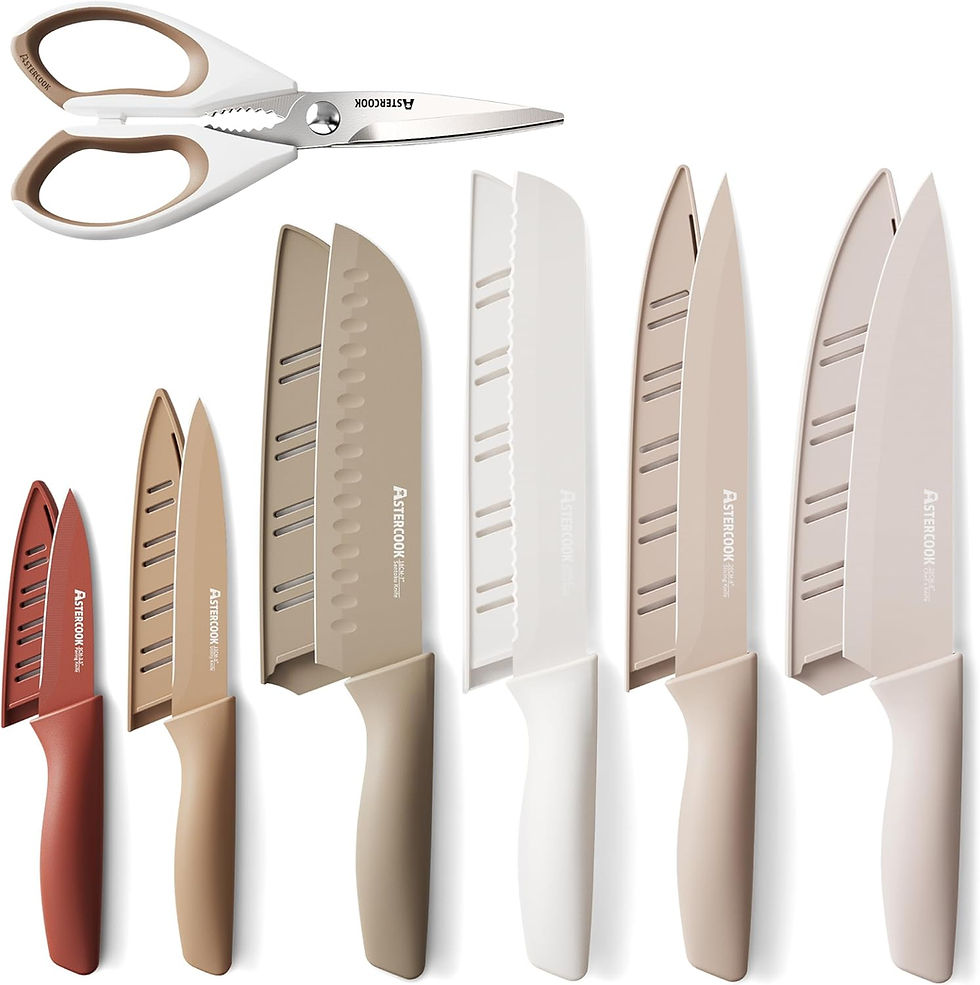
Astercook Knife Set
Knives Set with Anti-Rust Coating, Dishwasher Safe, Stainless Steel with Blade Guards


Comments